How Tokenization Can Help Build Education Initiatives in Africa

As a developing region, Africa has always relied on donations to build infrastructures like schools, hospitals, and shelters. For the most part, these donations ensure that many who are in need in Africa receive reprieves. However, for the donor, sometimes it is not clear where the funds have been directed.
Accountability of funds is a thorny issue in many development-oriented charities. Lack of trust in philanthropic organizations ranks highly because many people do not give to charities. According to Give.org, this sentiment is crucial in charitable initiatives.
“Survey takers say it is very important to trust a charity before giving, supporting the notion that public trust in charities is central to the success of the charitable sector. About 73 percent of respondents rated the importance of trusting a charity as 9 or 10 (Essential) on a 10-point scale. However, we found that only one out of five respondents (19 percent) highly trust charities,” its 2017 Donor Trust report said.
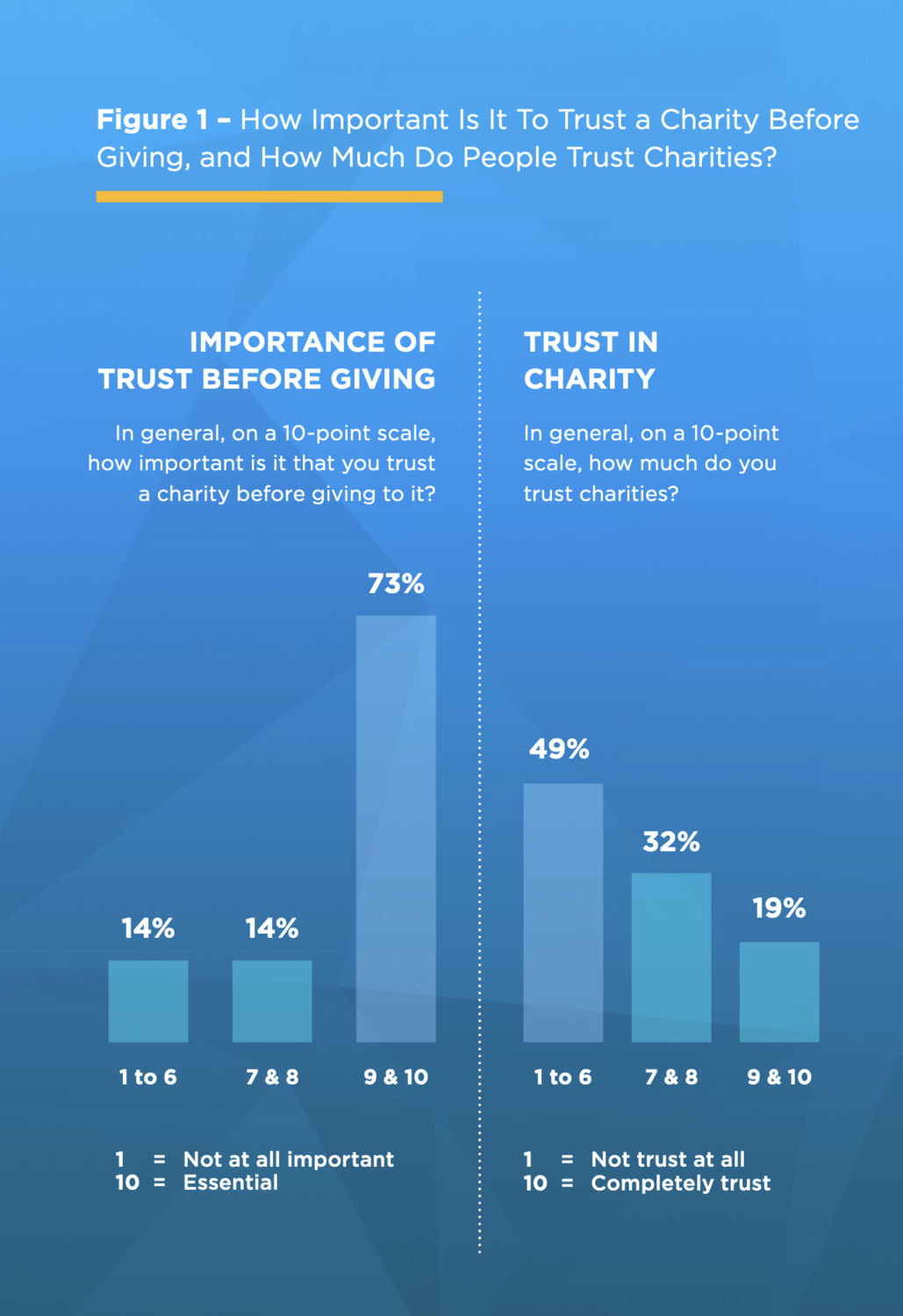
(c) Donor Trust Report. 73% said trust is important before they give to a charity, but only 19% actually trust charity.
It added, “When asked to consider how easy or difficult it is to know whether a particular charity is trustworthy, about two out of five respondents (40 percent) say it is difficult. That is a sharp decline as compared to 2001 when 7 out of 10 adults (70 percent) thought it was difficult to know whether a particular charity soliciting contributions was legitimate – i.e., actually did the good work they claimed to do and operated ethically.”
And therein lies the dilemma of legitimate charities, which are ready to do the right thing with the donor’s money. Is there a way donors can have closer oversight of their funds? Is it possible that donors can become real partners in charitable projects such as building schools? Is there an easier way to let the donor be in the driving seat in the charities of their choice?
Such answers could assure donors that their efforts are paying off in the way they envisioned.
The good news is that technology has offered several platforms to build trust in charity organizations. Blockchain has been tipped to serve this purpose, especially the tokenization of donations.

Photo by Jievani Weerasinghe on Unsplash
With the development of the blockchain ecosystem, cryptocurrency seems to have taken more advantage of the technology than any other product.
In the blockchain system, a token represents part of an asset that cryptocurrency has purchased. So it is more than just donating cryptocurrency to an initiative, but partly owning the underlying asset. This has been tipped to be the next big thing within the blockchain ecosystem.
“In this way, the economic value of the asset is conferred to the token. Ownership of the asset is represented by ownership of the token on the blockchain,” blockchain company CoreLedger said in its blog.

Photo by Shubham Dhage on Unsplash
“Finally, asset tokenization provides transparency and security. Ownership is indisputably recorded on the blockchain independently of where an asset is stored. Any ownership rights can also be embedded directly into the token, with the possibility of having contractual obligations enshrined into smart contracts which execute automatically,” CoreLedger continued.
The effect of tokenization will grow in the commercial markets. Its products are geared to be felt in the charity space.
Furthermore, a system that ensures that funds can be monitored and the intended projects funded can open up the donor community to more options.
For example, a charitable organization that seeks to build a school can open a blockchain token platform through a known vendor. Once this is done, the charity can run a fundraising campaign directing donors to take up tokens rather than sending money. They could do this through the various cryptocurrencies compatible with their token platform.

Using smart contracts, donors can ensure that no funds are released until the construction of the school commences. Even more, the donors can trigger payments at different levels of the project to ensure that the funds match the level of the project.
Since there are many eyes on the money pot, project managers know that the funding would run dry if used in an undesirable manner. In turn, this puts the donors in the driving seat of the projects they believe in and is more likely to support other progressive projects.
Since tokenization enables donors to see where their funds are going and to own the resulting assets, tokenization makes sense in charitable donations. Whether the donor is an individual or an organization, direct donations to the targeted initiative can revive the dwindling trust in charitable organizations.

Photo by Shubham Dhage on Unsplash
The underlying power of blockchain offers an irrefutable public ledger of how cash has been used and distributed in various educational charities. Its surrounding security features can ensure that fraud and siphoning of funds are stemmed.
It is even more suitable since educational facilities are physical assets that benefit many more needy students in underdeveloped areas. Having ownership of such assets gives a donor an inroad to oversee how the funds are being put to use rather than leaving it all to an organization.
Charitable organizations can also benefit by reducing administrative costs in managing the various funds, ensuring that more cash goes to the intended project. The administration interface offered by the vendors of tokenization companies offers relief to ensure the closest patronization of funds.
An analysis from Forbes states:
“For charities, overhead costs have been a point of much contention. These costs denote the number of donations that goes to administrative expenses versus an actual cause, and while many see overhead costs as necessary, exorbitant administrative expense percentages are a red flag.”
“The Blockchain builds trust with donors, recipients, and other stakeholders to reach the right people and improve administration costs and efficacy. Show donors the difference their donation makes, acquire funds rapidly through crowdfunding, and hand control to the people you help,” it added.
Technology has ‘digitized’ accountability in transactions. This can have a huge effect on how people support the charity of their choice in the coming years. The technology is readily available. It is up to charity organizations to show good faith by accepting new ways to ensure transparency for their projects.
If this kind of content resonates with you, follow me for more stories, lessons, and behind-the-scenes insights from the frontlines of nonprofit leadership. And please — like, share, or comment to help this message reach others who care.